Best AI Agent Development Company in Noida and Delhi NCR
July 25, 2026






 By
Digicane Team
By
Digicane Team
Vision AI Solutions for Smarter Visual Workflows are tools designed to assist organizations in making sense out of visuals. As opposed to manually examining pictures and videos, companies can now use intelligent technologies to spot objects and patterns, check quality, and supervise processes in near-real-time.
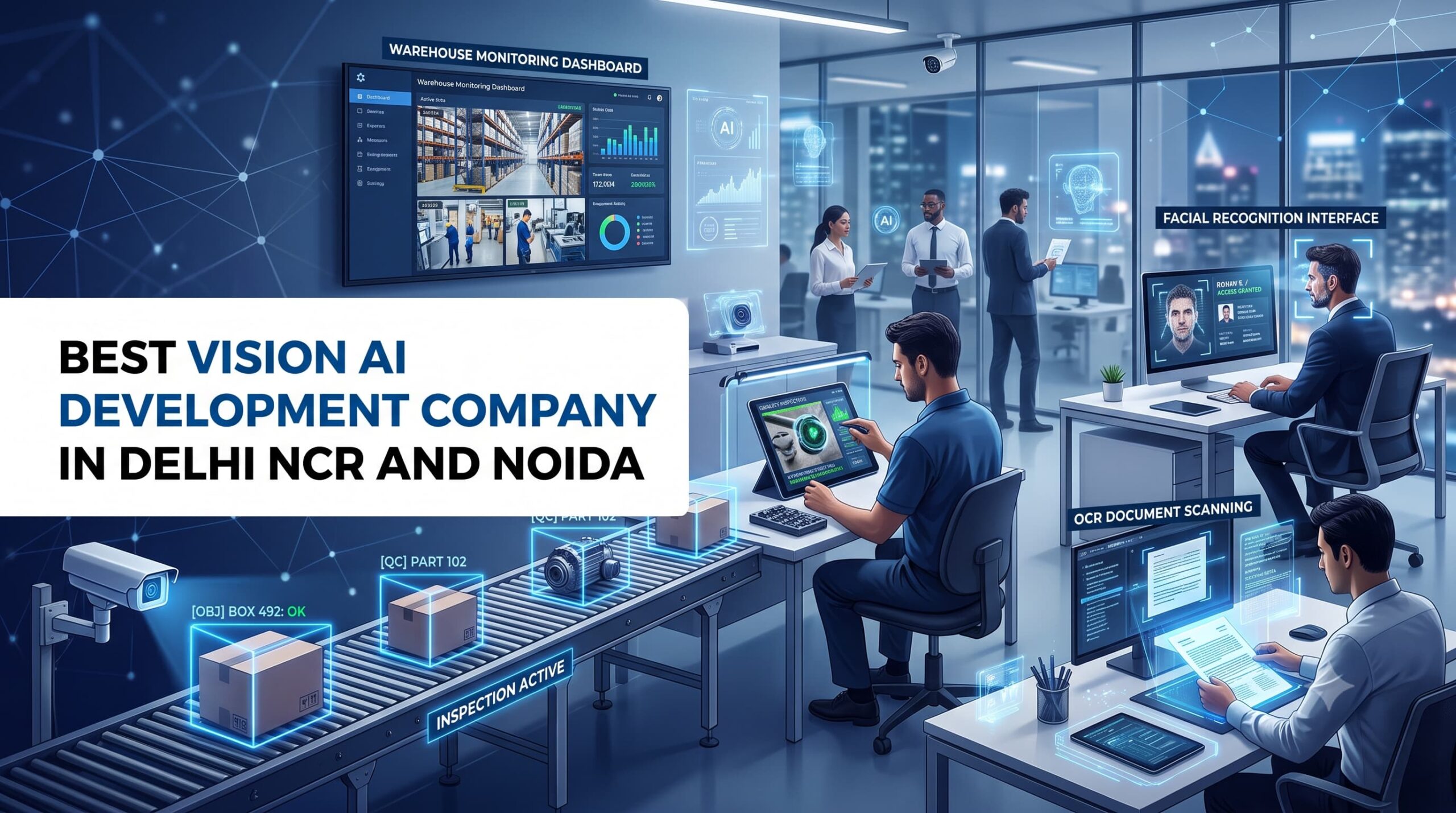
Vision AI Solutions for Smarter Visual Workflows can be especially useful for organizations operating within the manufacturing, health care, retail, logistics, security, and construction sectors. These solutions may assist with various processes including but not limited to: product inspection, identification of defects, inventory management, safety assessment, document handling, and consumer behavior analysis.
If the appropriate Vision AI strategy is used, then visual workflows can be made more interconnected, automated, and scalable. Companies will be able to respond faster to any problem that may arise, ensure greater transparency in their processes, and achieve better results based on the visual information available.

Most of the individuals would have numerous visual information stored on their folders, apps, chat, and dashboards. The issue here is that this visual information is not well-organized. The individual needs to open the file, zoom into it, look for details, read labels, and make judgments. Visual intelligence could play an important role in solving these issues by analyzing the information in a better manner. This would include object recognition, text extraction, pattern recognition, issue detection, and decision-making.
Many people do not need a complex AI system. They need something that solves practical problems, such as:
A good visual AI setup should reduce these issues step by step. It should not make your workflow heavier.
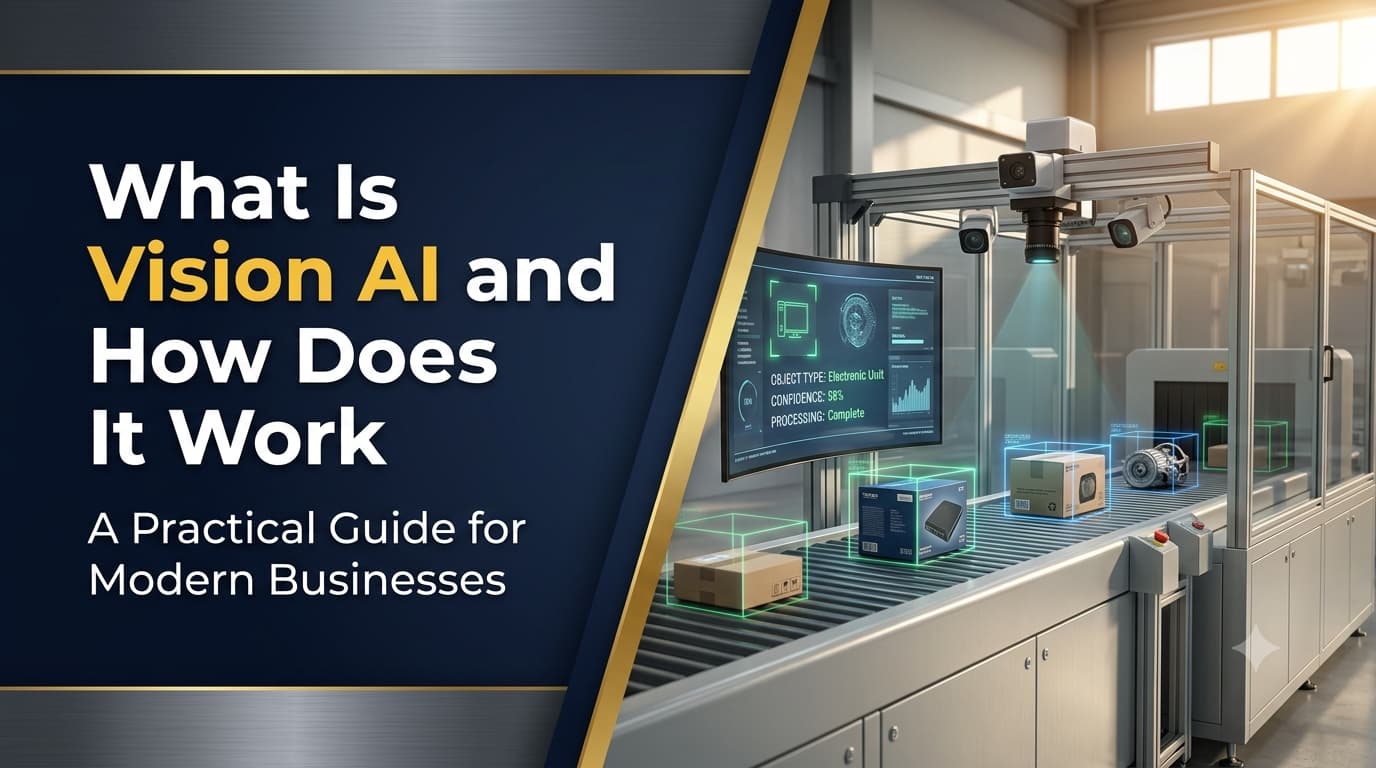
A visual intelligence system usually works in a simple flow. First, you upload or connect images. Then the system reads the image, identifies useful details, and sends the output to another tool or dashboard.
A basic flow may look like this:
An AI vision model helps make this possible by learning from visual patterns and applying that understanding to new images.
The best part is that visual AI does not only help technical teams. It can help operations, support, marketing, admin, quality teams, and even small businesses.
Some useful benefits include:
It feels small at first, but over time these saved minutes become real working hours.
Visual intelligence can be used in many daily workflows. The key is to choose use cases that match your actual need.
Teams can scan forms, receipts, handwritten notes, and screenshots. The system can pull out names, numbers, labels, dates, and other useful details.
Visual tools can identify defects, missing parts, packaging issues, or inconsistent image quality. This helps teams act quickly instead of waiting for long manual reviews.
Support teams can review images shared by customers and understand the issue faster. This creates better replies and smoother service.
Marketing teams can organize images, detect objects, sort creative files, and find the right visual assets faster.
Visual systems can help flag unusual activities or visual changes in controlled environments where monitoring is needed.
There are many options available, but the best choice depends on your use case. Some users want simple image reading. Some need advanced object detection. Some want API-based workflows.
Here is a simple comparison:
| Need | Better Fit |
| Quick image recognition | Simple visual AI platform |
| App-based usage | Vision AI app |
| Custom workflow | Vision AI API |
| Cloud-based image analysis | Azure AI Vision |
| Text and label detection | Google Vision AI |
| Learning and testing | Vision AI free options |
Do not choose a platform only because it sounds popular. Choose it because it solves your actual visual task.
A simple start is better than a perfect plan. Pick one visual task and test it.
Try this approach:
This keeps things clear and manageable. Small steps work better here, honestly.
Many users are also exploring Vision ai solutions careers because visual AI is growing across support, operations, software, analytics, automation, and product teams.
Useful skills include:
You do not need to master everything at once. Start with one use case, learn the basics, and build small projects. That is a more practical path.
Visual AI is powerful, but it still needs proper setup. Many users make mistakes by expecting perfect results immediately.
Avoid these:
A good system improves with better inputs, clear goals, and regular testing.
The increasing number of members within digital teams would benefit from such technologies by making reviews more efficient and records cleaner without the need for multiple evaluations. Using visual AI technology, Prooperty.com will be able to streamline visual information management, make faster responses, and avoid duplication. However, the core advantage of such technology is not in efficiency.
The advantages of Vision AI solutions are that they assist users in processing their images, documents, or visual tasks in an efficient manner. They ensure faster and organized work. The process begins by starting with a single use case. After thorough testing and improving it gradually, move on to other processes once it is optimized. This will provide Digicane systems with an optimal solution in increasing efficiency and minimizing human intervention at relevant places.
They are used to read images, detect objects, extract text, organize files, and support faster visual decision-making.
Yes, many tools offer simple interfaces. Coding is useful for custom workflows, but it is not required for basic usage.
It scans images and documents automatically, extracts useful details, and helps teams act faster.
Yes, small businesses can use it for document reading, image sorting, customer support, and quality checks.
Image editing changes how an image looks. Visual AI understands what is inside the image and turns it into useful information.
Yes, many systems can extract printed or handwritten text from scanned files, forms, and screenshots.
Accuracy depends on image quality, lighting, input type, and how well the system is trained or configured.
Test image quality, output accuracy, data privacy, workflow speed, and whether the result is useful for your team.
Yes, many platforms can connect with apps, dashboards, sheets, and custom workflows through integrations or APIs.
Start with small projects like image tagging, text extraction, or document sorting. Then move to more advanced workflows.