
AI Agents Automation in India: A Complete Pricing Guide
July 18, 2026






 By
Digicane Team
By
Digicane Team
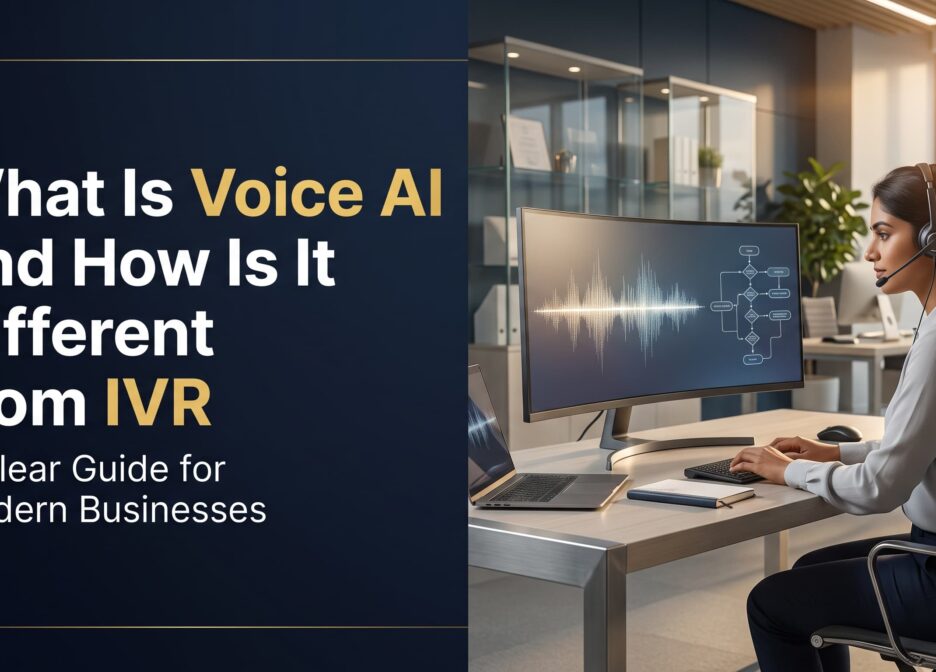
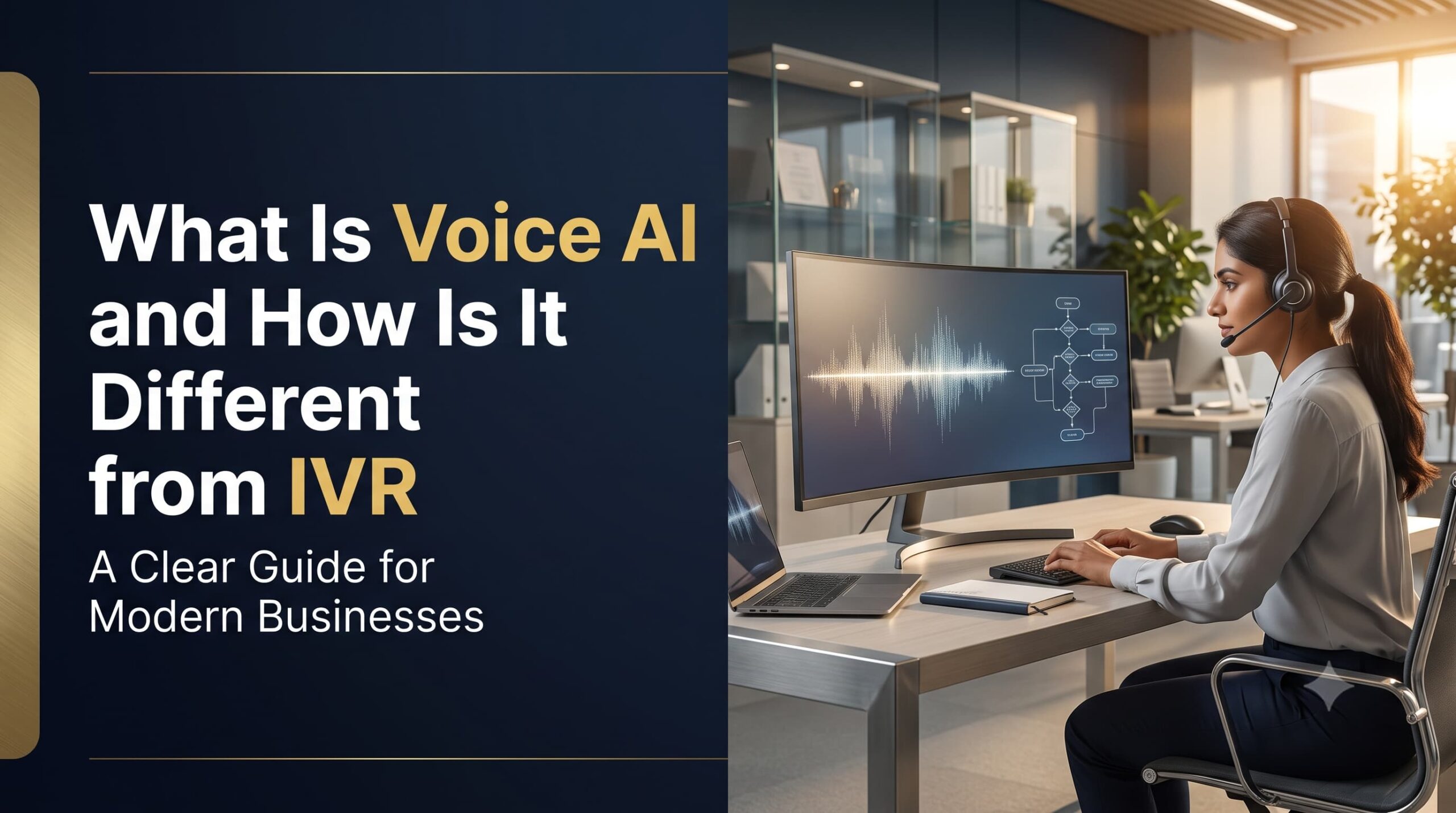
The typical situation for most people involves trying to reach someone from a company but ending up trapped in an automated menu system, hitting random numbers, realizing the choices don’t fully suit your needs and then hanging up in frustration after waiting too long. The whole concept here revolves around a technology known as IVR and it has been defining what customers expect from a call to a business for many years. Voice AI solutions provide a new twist by having the technology understand what you’re asking rather than trying to make you choose from a set of preprogrammed options. In this guide, we’ll define what voice AI entails, why it is better than IVR and also how to determine whether voice AI solutions are suitable for your business.
All companies receiving phone calls eventually face the same challenge, which is that consumers always want a prompt response regardless of the time of day, while hiring enough skilled human operators on an around-the-clock basis becomes too costly and simply unmanageable in many cases. Classic IVR systems have been created for solving just that problem decades ago and distributing calls automatically, enabling fewer human agents to process more incoming calls.
However, customer demands have evolved much faster than traditional phone solutions in most cases, and now customers want their phone call experience to be more natural and less similar to a labyrinth of menu options that requires pressing certain numbers. And that’s the exact gap which voice AI has entered, and comprehending both technologies in detail will be the first step to choosing the right one for your business needs.
IVR stands for “interactive voice response.” It is the automatic system used when one presses a number using the keypad to get to the relevant department or when prompted via recording, with the user going through preprogrammed options available from the call menu. In this case, it uses the decision tree algorithm where each possibility is predefined by somebody beforehand; therefore, the system only responds to what the user chooses as his path, either press 1, press 2, etc. Since it’s a deterministic model, it always follows the exact path no matter how many times one uses the process.
And for simple and high volume routing applications, it’s quite helpful and economical. This model still exists, and it is actually quite reasonable in many situations since it’s very cheap to implement and maintain and reliable for applications that do not require any changes at all.
Voice AI technology works on a completely different principle by employing natural language processing and more advanced language models that can actually understand what the caller wants to say rather than matching it to a predetermined set of menu options. Rather than obliging the user to press one button to ask about their billings, the voice AI technology will allow the caller to say things like I have a question regarding my last invoice and will understand the meaning behind it and respond accordingly.
The technology is capable of keeping context throughout the whole conversation so that a customer will never have to repeat themselves and is able to respond to multiple inquiries at once during the same conversation. Because the language model is probabilistic in nature, the voice AI technology will respond intelligently even to the phrases not explicitly programmed into it before.
It all comes down to adapting to the other in the conversation. While in IVR technology it is the caller who has to adapt to the machine, having to rephrase his requests into options from the menu in order to navigate through the pre-prepared structure, with voice AI it is the system itself that has to adapt to the caller by interpreting his request in a natural manner, being able to give unexpected responses according to the meaning behind the words. IVR is based on the strict and predetermined paths of communication, whereas voice AI is based on the interpretation of the meaning of what is said, thus making one technology feel more like using a machine and the other one – more like having a dialogue.
Voice AI is likely to be the winner when a company faces unpredictable customer queries instead of just a few standard ones. The reason for that is in much lower call duration, as customers are not required to go through several menus until the right result is reached. Another advantage of voice AI is its ability to cope with several intents at once, making it possible for a customer to talk about an order and then ask about billing in one call. It is also better in terms of scalability, as a Vision AI solution is capable of handling several calls at once and a client is never going to experience waiting in queue.
This solution is also better perceived by clients, as it does not involve strict scripts and keyword-based actions and, therefore, sounds less frustrating and annoying for users. For businesses that have implemented AI Agents Automation elsewhere, the use of voice AI becomes quite obvious and easy to implement.
It would certainly be inaccurate to portray all applications of IVR as hopelessly outdated. There truly are scenarios where IVR can still be used effectively. When routing callers into one of two or three departments, particularly with large call volumes, IVR will always be cheap and utterly reliable. Some companies which have a policy of scripted answers and cannot afford any deviation from this script might want to rely on IVR due to its predictability: each path and outcome is predetermined. Also, small firms with a narrow range of customer needs could be satisfied with a simple IVR setup, for this kind of system is quite adequate for their needs and exceeds them unnecessarily. In other words, IVR is not bad technology, but its scope is just smaller than what modern business requires.
In reality, there are many companies who don’t need to make the choice between the two because voice AI is commonly integrated onto an existing phone system as a more intelligent entrance point. The call gets handled by the voice AI component first and it sorts out most of the requests right away using conversation, while the complicated and sensitive requests get processed by the IVR system, or the human operator directly. This is a good way to update your customer service without having to tear down something that works quite well for some specific tasks. It’s also less risky to introduce voice AI this way, since you can analyze its effect on the average call time and customer satisfaction before rolling it out more broadly.
It depends mostly on how diverse your incoming calls are and what kind of expenses that variety creates. If your calls tend to be limited to a predictable and rather small set of inquiries, your current IVR can suffice and a voice AI upgrade will hardly provide any significant benefits for you. However, if your staff spends a lot of time answering various unpredictable questions, or if your clients tend to report the problems associated with menu frustration, excessive waiting periods, and repeating information, you should consider that the implementation of voice AI will help to solve all those issues.
In addition, it is important to consider the question of growth – rapid increase of call volume in your company means that implementing voice AI will pay off faster because it will reduce the necessity of increasing your phone staff. Finally, many companies deciding to implement voice AI are currently considering RAG services as well – a voice AI operator that relies on correct company data answers questions from the clients much more accurately.
IVR stands for Interactive Voice Response, an automated phone system that allows callers to interact using keypad inputs or simple voice commands. It helps route calls to the appropriate department based on predefined options.
The implementation cost depends on the business requirements and solution complexity. While Voice AI may involve a higher initial investment, it often delivers greater long-term value through improved automation and customer experience.
Yes, modern Voice AI solutions are trained to recognize a wide range of accents, speech patterns, and natural language. This enables more accurate and conversational interactions compared to traditional IVR systems.
No, Voice AI can usually integrate with your existing phone system and business infrastructure. This allows businesses to upgrade customer interactions without replacing their current communication setup.
When Voice AI cannot confidently resolve a request, it seamlessly transfers the call to a human representative. The conversation context is shared, so customers do not have to repeat their information.
Voice AI is generally faster because customers can speak naturally instead of navigating multiple menu options. It identifies user intent quickly and provides more efficient assistance.
Voice AI is suitable for businesses of all sizes. Small and medium-sized businesses use it to automate customer support, appointment scheduling, lead qualification, and other routine voice interactions.
Yes, Voice AI operates 24/7, allowing businesses to answer calls, assist customers, and automate conversations even outside regular business hours without additional staffing.
Voice AI is widely used in healthcare, banking, retail, hospitality, insurance, logistics, education, and customer service. Any business that manages a high volume of customer calls can benefit from Voice AI.
The best approach is to begin with a pilot project focused on a specific department or use case. This allows businesses to evaluate performance, measure results, and scale the solution with confidence.
Voice AI Solutions are both designed to address the same issue of efficient calls management without having an actual person answering each one, but there is quite a difference in the approach. IVR performs well in cases of simple and predictable call routing, whereas voice AI is meant to cope with more complicated and flexible situations which clients expect to encounter when calling businesses. Your decision must be based only on how complex are your actual phone calls and how much money is wasted on their processing in terms of human resources and client dissatisfaction. At Digicane Systems, we develop voice AI solutions that perfectly integrate into any telephony system and work initially with a pilot version that shows real results before scaling. If your employees spend working days dealing with repetitive phone inquiries, it may be a good idea to talk about voice AI implementation.
July 18, 2026
July 18, 2026